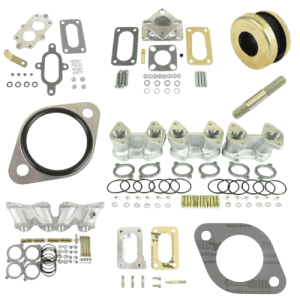
Types of Intake Manifolds
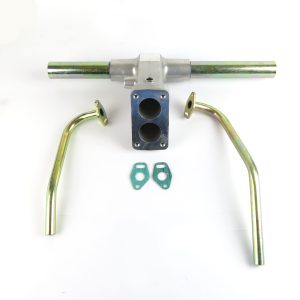
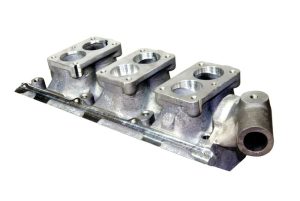
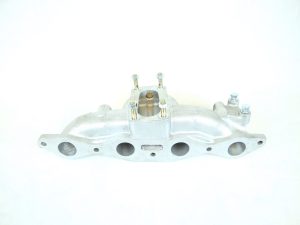
There are several types of aftermarket intake manifolds, falling into 2 main categories: downdraft (or downdraught) and sidedraft (or sidedraught).
This is particularly relevant with older vehicles that feature carburettors and a float chamber. You either had a downdraft carburettor or a sidedraught carburettor and they could not be interchanged, unless a different / aftermarket / custom intake manifold was available.
Some very early vintage cars featured updraft / updraught intake manifolds and carburetors. These are getting rarer and rarer.
Each intake manifold serves a vary specific engine type, make and model.
Intake manifolds are very specific, and very, very rarely can they be interchanged between different engines.
The engine configurations popular aftermarket intake manifolds are often found in are:
- V12 engines
- V 8 engines
- V6 engines
- V4 engines
- V Twin engines
- Straight 8 engines
- Straight 6 engines
- Straight 5 engines
- Straight 4 engines
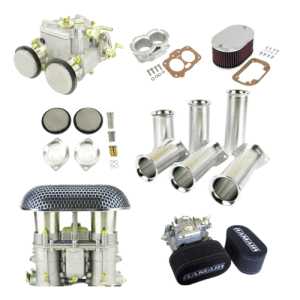
Intake manifolds need two mounting gaskets: one for sealing the intake manifold onto the cylinder head of the engine, and the other for sealing the carburetor(s) or throttle body onto the intake manifold.
Maintenance and Troubleshooting
Regular Inspection
Periodically inspect the intake manifold for signs of wear, cracks or loose connections. Check for any vacuum leaks or coolant leaks around the manifold.
Cleaning
Clean the manifold and surrounding areas to remove carbon deposits and debris. Use appropriate cleaners like carb cleaner or brake cleaner, along with brushes, to clean thoroughly without damaging components.
Tightening Bolts
Regularly check and tighten the bolts securing the manifold and the carburettor/throttle body. Loose bolts can cause air leaks and performance issues. Use a torque wrench to ensure proper tightening (if applicable). Do NOT over-tighten the carburettor onto the manifold, as it might warp and then leak air.
Gasket Replacement
Replace gaskets when removing or reinstalling the manifold. Use high-quality gaskets and ensure proper sealing to prevent leaks. Generally, additional sealant shouldn’t be used. If a mating surface is flat and clean, a good quality brand new gasket is perfectly adequate.
Vacuum Leaks
Test for vacuum leaks using a smoke machine or by listening for hissing sounds. Repair any detected leaks promptly.
Performance Problems
If experiencing performance issues like hesitation or loss of power, inspect the manifold for proper fitment and sealing. Loose intake manifolds can cause air leaks and affect engine performance.